


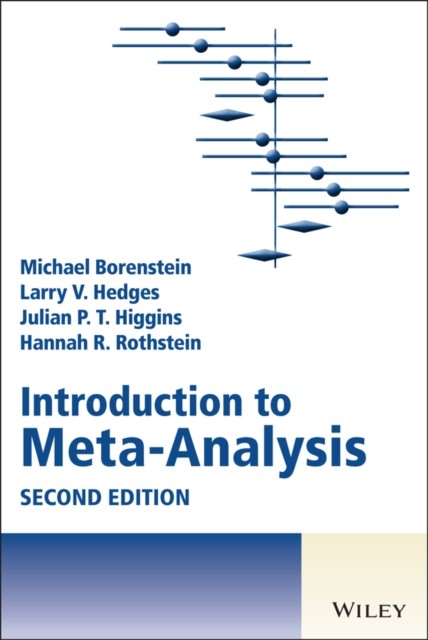
Introduction to Meta-Analysis, 2nd Edition

SECURE PAYMENT

SHIPMENT

FREE RETURN
Informations


synthesizing data from a series of separate studies The first edition of
this text was widely acclaimed for the clarity of the presentation, and
quickly established itself as the definitive text in this field. The
fully updated second edition includes new and expanded content on
avoiding common mistakes in meta-analysis, understanding heterogeneity
in effects, publication bias, and more. Several brand-new chapters
provide a systematic \"how to\" approach to performing and reporting a
meta-analysis from start to finish.
Written by four of the
world\'s foremost authorities on all aspects of meta-analysis, the new
edition: Outlines the role of meta-analysis in the research processShows
how to compute effects sizes and treatment effectsExplains the
fixed-effect and random-effects models for synthesizing dataDemonstrates
how to assess and interpret variation in effect size across
studiesExplains how to avoid common mistakes in meta-analysisDiscusses
controversies in meta-analysisIncludes access to a companion website
containing videos, spreadsheets, data files, free software for
prediction intervals, and step-by-step instructions for performing
analyses using Comprehensive Meta-Analysis (CMA) Download videos, class
materials, and worked examples at www.Introduction-to-Meta-Analysis.com
\"This book offers the reader a unified framework for thinking about
meta-analysis, and then discusses all elements of the analysis within
that framework. The authors address a series of common mistakes and
explain how to avoid them. As the editor-in-chief of the American
Psychologist and former editor of Psychological Bulletin, I can say
without hesitation that the quality of manuscript submissions reporting
meta-analyses would be vastly better if researchers read this
book.\"—Harris Cooper, Hugo L.
Blomquist Distinguished Professor
Emeritus of Psychology and Neuroscience, Editor-in-chief of the American
Psychologist, former editor of Psychological Bulletin \"A superb
combination of lucid prose and informative graphics, the authors provide
a refreshing departure from cookbook approaches with their clear
explanations of the what and why of meta-analysis. The book is ideal as a
course textbook or for self-study. My students raved about the clarity
of the explanations and examples.\" —David Rindskopf, Distinguished
Professor of Educational Psychology, City University of New York,
Graduate School and University Center, & Editor of the Journal of
Educational and Behavioral Statistics \"The approach taken by
Introduction to Meta-analysis is intended to be primarily conceptual,
and it is amazingly successful at achieving that goal.
The
reader can comfortably skip the formulas and still understand their
application and underlying motivation. For the more statistically
sophisticated reader, the relevant formulas and worked examples provide a
superb practical guide to performing a meta-analysis. The book provides
an eclectic mix of examples from education, social science, biomedical
studies, and even ecology.
- Shipping Information
- Files
Description
synthesizing data from a series of separate studies The first edition of
this text was widely acclaimed for the clarity of the presentation, and
quickly established itself as the definitive text in this field. The
fully updated second edition includes new and expanded content on
avoiding common mistakes in meta-analysis, understanding heterogeneity
in effects, publication bias, and more. Several brand-new chapters
provide a systematic \"how to\" approach to performing and reporting a
meta-analysis from start to finish.
Written by four of the
world\'s foremost authorities on all aspects of meta-analysis, the new
edition: Outlines the role of meta-analysis in the research processShows
how to compute effects sizes and treatment effectsExplains the
fixed-effect and random-effects models for synthesizing dataDemonstrates
how to assess and interpret variation in effect size across
studiesExplains how to avoid common mistakes in meta-analysisDiscusses
controversies in meta-analysisIncludes access to a companion website
containing videos, spreadsheets, data files, free software for
prediction intervals, and step-by-step instructions for performing
analyses using Comprehensive Meta-Analysis (CMA) Download videos, class
materials, and worked examples at www.Introduction-to-Meta-Analysis.com
\"This book offers the reader a unified framework for thinking about
meta-analysis, and then discusses all elements of the analysis within
that framework. The authors address a series of common mistakes and
explain how to avoid them. As the editor-in-chief of the American
Psychologist and former editor of Psychological Bulletin, I can say
without hesitation that the quality of manuscript submissions reporting
meta-analyses would be vastly better if researchers read this
book.\"—Harris Cooper, Hugo L.
Blomquist Distinguished Professor
Emeritus of Psychology and Neuroscience, Editor-in-chief of the American
Psychologist, former editor of Psychological Bulletin \"A superb
combination of lucid prose and informative graphics, the authors provide
a refreshing departure from cookbook approaches with their clear
explanations of the what and why of meta-analysis. The book is ideal as a
course textbook or for self-study. My students raved about the clarity
of the explanations and examples.\" —David Rindskopf, Distinguished
Professor of Educational Psychology, City University of New York,
Graduate School and University Center, & Editor of the Journal of
Educational and Behavioral Statistics \"The approach taken by
Introduction to Meta-analysis is intended to be primarily conceptual,
and it is amazingly successful at achieving that goal.
The
reader can comfortably skip the formulas and still understand their
application and underlying motivation. For the more statistically
sophisticated reader, the relevant formulas and worked examples provide a
superb practical guide to performing a meta-analysis. The book provides
an eclectic mix of examples from education, social science, biomedical
studies, and even ecology.


test
Shipping Information
Επιστροφές
ΠΟΛΙΤΙΚΗ ΕΠΙΣΤΡΟΦΩΝ
Στόχος μας είναι να εξασφαλίσουμε την απόλυτη ικανοποίησή σας. Αν για οποιονδήποτε λόγω, δεν μείνετε ευχαριστημένοι από την παραγγελία σας, μπορείτε να ασκήσετε το δικαίωμά σας να επιστρέψετε μέρος ή όλα τα προϊόντα που αγοράσατε εντός δεκατεσσάρων (14) ημερών από την ημερομηνία παραλαβής. Αν δεν υπάρχει διαθέσιμο
το ανάλογο προϊόν που επιθυμείτε, το ποσό διαφοράς που προκύπτει διατηρείται στον λογαριασμό σας για να το χρησιμοποιήσετε για μία άλλη αγορά. Θα γίνεται αποδεκτή μόνο η επιστροφή των προϊόντων που βρίσκονται σε άριστη κατάσταση. Παρακαλώ, σημειώστε ότι η αποστολή του μη επιθυμητού προϊόντος γίνεται με εταιρεία courier με χρέωση της εταιρίας μας. Η αποστολή του νέου προϊόντος γίνεται μέσω εταιρεία courier με χρέωση πελάτη.
ΕΛΛΑΤΩΜΑΤΙΚΟ ΠΡΟΙΟΝ
Στην περίπτωση που λάβετε ένα ελαττωματικό ή κατεστραμμένο προϊόν το βιβλιοπωλείο μας θα καταβάλλει κάθε προσπάθεια για να αντικατασταθεί με ένα ίδιο ή παρόμοιο προϊόν χωρίς κάποιο επιπλέον κόστος για σας.
Παρακαλούμε επικοινωνήστε μαζί μας με e-mail στο ipokratis@ipokratis.gr ή στο 2310212212 για περαιτέρω διευκρινήσεις.


